
Greater mobility through knee joint denervation
On this page
Chronic knee joint pain is a significant burden and, unfortunately, sometimes persists even after all surgical and conservative treatment options have been exhausted. For patients suffering from osteoarthritis or chronic knee pain, Prof. A. Lee Dellon developed at his Institute for Peripheral Nerve Surgery in Baltimore, USA, the innovative method of knee denervation, which is performed by Dr. Karl Schuhmann .
This is a procedure that Prof. Dellon first developed in 1992, yet despite its great success in the USA, only a handful of surgeons offer it in Germany. In principle, knee joint denervation is suitable for all patients with chronic knee pain in whom other measures have not been sufficiently effective or are not possible.
The procedure has been applied successfully for many years by Dr. Schuhmann and has already freed many patients from unbearable knee pain.
At a glance
- Duration of procedure: minimally invasive procedure, 30–40 minutes
- Anaesthesia: Local anaesthesia or general anaesthesia
- Stay: inpatient
Kniegelenksdenervation im TV-Beitrag (WDR Lokalzeit Dortmund)
Knee joint denervation – the alternative to total knee replacement
Chronic knee pain has become increasingly common and often restricts everyday life to such a degree that patients seek every available treatment option. Unfortunately, neither conservative treatment nor surgery always provides relief, and the pain persists. Until recently, the only remaining option for chronic knee pain was a total knee replacement. For some time now, however, a successful procedure has been available to eliminate this often unbearable pain. Prof. A. Lee Dellon developed the innovative method of knee joint denervation at his Institute for Peripheral Nerve Surgery in Baltimore, USA, where it has achieved outstanding results.
This is a procedure that Prof. Dellon first developed in 1992, yet despite its remarkable success in the USA, only a handful of surgeons offer it in Germany. Knee joint denervation serves to eliminate or alleviate pain. The procedure has for many years been applied with great success by Dr. Schuhmann and his team, and has already freed many patients from unbearable pain. During this procedure, small pain-conducting nerves around the knee joint are identified and a segment of each is removed, preventing them from regenerating.
Find detailed information about the knee denervation procedure here.
Knee joint denervation is also suitable for older patients
Knee joint denervation (nerve ablation) is in principle suitable for all patients. Even for older patients for whom a major operation would carry too great a risk, knee denervation is a worthwhile procedure – particularly when they suffer from chronic knee pain and previous orthopaedic measures have not produced the desired results.
The test block prior to knee joint denervation
Whether the procedure is likely to be successful for a patient must first be assessed by means of a so-called test block of the affected knee nerves. The painful nerve exit points are located by palpation and then injected with a local anaesthetic. This temporarily blocks the function of the injected nerve, meaning the pain should disappear. By walking around and climbing stairs, the patient can determine whether and to what extent the pain is reduced. Only if the patient clearly rates this test as positive do we recommend proceeding with surgery. It must be emphasised once again that knee denervation does not represent a cure, but it does mean a dramatic reduction in pain.
Two days before the assessment, no pain medication should be taken, so that the actual effect of the local anaesthetic can be accurately determined. The painful knee should also not be treated with analgesic gels or creams (such as Voltaren or Diclofenac), as these too can influence the test result and prevent a realistic outcome from being achieved.
Following two successful outpatient test blocks, you will be given an appointment for the inpatient procedure. The hospital stay is usually two nights.
What exactly happens during knee denervation?
During knee joint denervation, the small pain-conducting nerves located around the knee joint are identified. A very small segment of each nerve fibre is then removed, preventing the nerve from regenerating. This means that pain signals are no longer transmitted to the brain and the knee pain is eliminated.
The knee joint itself is not opened or treated during the denervation. In knee denervation, nerves within the muscles or fatty tissue outside the joint are divided. This means that changes to bones, cartilage, or ligaments are left unaffected. These changes are, however, responsible for generating the pain in the knee. The knee may therefore occasionally swell even after denervation, and the bony changes visible on X-ray may continue to progress.
The success of knee joint denervation lies in reducing knee pain to a tolerable level or eliminating it entirely. The division of the nerves, as Dr. Schuhmann explains, does not cause paralysis, because the pain-conducting nerves do not control muscle function. Mobility is preserved or even improved, provided that the previous restriction of movement was primarily caused by pain. Even skin sensation is usually maintained, with the exception of occasional numbness around the short surgical scars.
How does knee joint denervation proceed?
The low-risk, minimally invasive knee joint denervation procedure takes approximately 30–40 minutes during a short inpatient stay at our clinic. The Dellon knee joint denervation procedure is not a curative treatment, but it does achieve a dramatic reduction in pain. We have performed this treatment successfully on a very large number of patients.
The procedure is performed routinely by Dr. Schuhmann and can be carried out under local anaesthesia or general anaesthesia. Paralysis and sensory disturbances, often feared by patients, very rarely occur. On the contrary, mobility of the knee actually improves. Prior to knee denervation, the pain in the knee was so severe for many patients that proper movement was not possible. Skin sensation is also preserved in the vast majority of cases.

Patient testimonials – knee denervation
(Image only, no text content on the page)
---
Your expert for knee denervation according to Dellon
Contact us for a thorough and professional consultation. This is a very important step for us in the preparation for knee denervation. Our practice team is available Monday to Friday from 9:00 to 18:00 and at weekends by appointment.
Your expert for knee denervation in Düsseldorf – Dr. med. Karl Schuhmann
Knee denervation expert Dr. Schuhmann in the press
- Pain-free knees thanks to divided nerves
- Pain-free despite osteoarthritis
- Pain-free knees – a gentle approach without operating on the joint itself

Your expert for knee denervation according to Dellon
Contact us for a thorough and professional consultation. This is a very important step for us in the preparation for knee denervation. Our practice team is available Monday to Friday from 9:00 to 18:00 and at weekends by appointment.
Your expert for knee denervation in Düsseldorf – Dr. med. Karl Schuhmann
Knee denervation expert Dr. Schuhmann in the press
- Pain-free knees thanks to divided nerves
- Pain-free despite osteoarthritis
- Pain-free knees – a gentle approach without operating on the joint itself
Benefits
- Dr. Karl Schuhmann is a recognised expert in knee denervation, a procedure performed in Germany by only a select few surgeons
- Dr. Schuhmann and his team have performed well over 1,000 knee joint denervations
- The team has been performing this procedure at the Augusta Kliniken Bochum Hattingen since 2005
- The specialist in Plastic and Aesthetic Surgery has over 22 years of experience in his field
- Low-risk microsurgical procedure for knee joint pain
- no downtime
- dramatic pain relief for knee pain
- elimination of movement-restricting pain
- Effective treatment for knee osteoarthritis
- Suitable as a therapy for knee pain before and after the implantation of a total knee replacement
Frequently asked questions
How is the knee joint denervation procedure performed?
In knee joint denervation, the knee joint is not opened. During the procedure, the small pain-conducting nerves located around the knee joint are identified and divided. By precisely severing the nerve fibres that transmit pain signals from the knee to the brain, the pain is no longer perceived. The knee joint itself is not opened during this procedure, as the nerves are accessed within the muscles or fatty tissue outside the joint.
Who is suitable for knee joint denervation?
Knee joint denervation is suitable for all patients with chronic knee pain (e.g. knee osteoarthritis) in whom other measures have not been sufficiently effective or are not possible. Knee joint denervation (nerve ablation) is also suitable for older patients for whom a major operation would carry too great a risk and in whom previous orthopaedic measures have not produced the desired results. Even where knee osteoarthritis has been diagnosed, denervation can provide relief from knee pain. It must be noted, however, that this procedure does not represent a cure, but does mean a dramatic reduction in knee pain. Patients with persistent pain following the implantation of a total knee replacement, or younger patients who do not yet wish to have a knee replacement, are also candidates for knee joint denervation according to Dellon.
What do I need to bear in mind before knee joint denervation according to Dellon?
Whether the procedure is likely to be successful is determined by a so-called test block, in which the affected knee nerves are assessed. The painful nerve exit points are located by palpation and injected with a local anaesthetic. You can then determine, over a short period of time during walks and stair climbing, whether and to what extent the knee pain is reduced. If that is the case, the treatment can proceed. Only if the patient clearly rates this test as positive do we recommend proceeding with surgery. Two days before the assessment, no pain medication should be taken, so that the actual effect of the local anaesthetic can be accurately determined. The painful knee should also not be treated with analgesic gels or creams (such as Voltaren or Diclofenac), as these too can influence the test result and prevent a genuine outcome from being achieved. In addition, no blood-thinning medication should be taken for 7 days prior to the procedure (in particular Marcumar). This should be discussed with your GP in advance to determine whether blood-thinning medication can be discontinued and when, and whether an alternative medication (e.g. heparin) should be administered in the interim.
What do I need to bear in mind after knee joint denervation?
The changes to bones, cartilage, or ligaments that have given rise to the knee pain cannot be cured by this method. However, through this procedure the pain is reduced to a tolerable level or disappears entirely. Mobility of the knee is preserved and often actually improves, as the movement-restricting pain has been eliminated. The knee may occasionally swell in the future, and the changes to bones, cartilage, or ligaments visible on X-ray may continue to progress. --- <!-- IMAGE: images/kniedenervation-nach-dellon.jpg -->
Dr. Schuhmann in der Presse
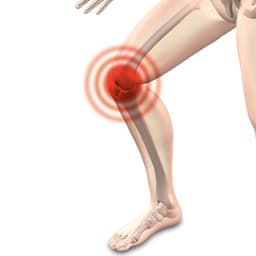 Kniegelenksdenervation - schmerzfrei ohne OP12. Oktober 2012
 Kniegelenksdenervation - schmerzfreie Knie ohne große Operation15. Oktober 2009
- Trotz Arthrose am Knie schmerzfrei13. August 2008
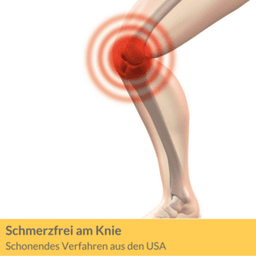 Schonendes Verfahren aus den USA nimmt Schmerzen im Knie19. Juni 2008
- Schmerzfreie Knie - schonend ohne Operation am Gelenk selbst13. Januar 2008
You might also be interested in
Why early treatment is crucial
Personally committed to your well-being "The decision to have a tummy tuck is often a significant step that can have a positive impact not only on your body, but also on your quality of life.
The upper body lift, also known as an upper bodylift, encompasses upper arm lift, breast lift and tightening of the back area. In the ...
The fat-dissolving injection in Düsseldorf, also known as injection lipolysis, lipolysis injection, or slimming injection, is a non-surgical method for reducing smaller fat deposits. Treatment with the fat-dissolving injection is targeted specifically at very...