A cosmetic surgeon is not the same as a specialist in plastic and aesthetic surgery

At a glance
- "Cosmetic surgeon" is not a protected title
- Specialist requires 6 years of training
- Checklist for verifying qualifications
- Patient safety is the top priority
(or: A cosmetic surgeon is not a specialist: what you need to know before undergoing treatment)
Patient information with checklist
If you are considering an aesthetic treatment, you should know who you are entrusting yourself to. Incorrect decisions can not only be disappointing – in the worst case, they can leave lasting damage. Reports of failed procedures circulate in the media on a regular basis. Even if such reports are often presented in an exaggerated way, they describe real risks. We can only advise you to research the professional qualifications of your practitioner before any aesthetic treatment. And so that you know what to look out for: here is our overview, including a checklist for your consultation.
Any doctor may offer cosmetic treatments
The term "cosmetic surgeon" may sound like expertise and professional competence, but it is not a protected title in Germany. In contrast, the Specialist in Plastic and Aesthetic Surgery is a protected designation: six years of specialist training, assessed competence, and extensive operative experience.
Plastic and Aesthetic Surgeon: a protected specialist title!
Why the specialist title is decisive:
- 6 years of specialised specialist training, in addition to full medical registration
- Comprehensive knowledge in reconstruction, microsurgery, all tissue structures, and aesthetics
- Regular continuing education and certifications are mandatory
- Recognition as a specialist by the responsible regional medical board
- Frequently a member of VDÄPC, GÄCD, Interplast, etc.
In summary: Only those who fulfil these requirements are officially permitted to call themselves Specialist in Plastic and Aesthetic Surgery.
"Cosmetic surgeon": sounds good, says nothing
Many doctors describe themselves as cosmetic surgeons, despite having undergone no specialist surgical training whatsoever. This is permitted, as the title is not protected and may therefore be used without any controlled qualification. Short courses are generally sufficient to be able to offer certain treatments:
- • Weekend courses or private continuing education
- • Basic medical degree is sufficient
Surgical or clinical experience in the aesthetic field is often absent and is not required in order to offer such services.
Patient safety
Those who place themselves in the hands of a self-proclaimed "cosmetic surgeon" take on a risk that is often underestimated. Without a sound training in plastic and aesthetic surgery, there is a lack of in-depth knowledge of the complex anatomy of the face – for example, regarding the sensitive course of the facial nerve (N. facialis), which is crucial for facial expression and movement. And of the urgently necessary experience.
Equally problematic is inadequate preparation for complications, which can fundamentally arise with any medical procedure – including seemingly straightforward treatments. Surgical routine is required to keep risk to a minimum. When this is lacking, situations are often not recognised in time or are managed incorrectly. Health damage or aesthetically disappointing results are not uncommon consequences.
Patient safety also includes product selection
Responsible aesthetic medicine also means transparency at every level – including product selection. At our practice (artethic® Dr. Schuhmann & Kollegen), exclusively certified original products sourced directly from the manufacturer are used. This applies, for example, to treatments with hyaluronic acid, biostimulators, or other medical-aesthetic agents.
Every batch and identification number is documented traceably in the patient record. During the consultation, we will inform you about the product selection, origin, and application.
Still unsure? We are happy to help.
At our practice, you are advised and treated by specialists in Plastic and Aesthetic Surgery – with many years of experience, clear areas of focus, and always an open ear for your wishes.
How to identify a qualified plastic surgeon: a checklist for safe decisions
We have compiled a few questions for you. Using these, you can "verify" your prospective practitioner:
Does the doctor hold a specialist title?
Does the doctor hold the protected title "Specialist in Plastic and Aesthetic Surgery"?
Specialised training and operative experience?
Has a specialist training of at least six years in plastic surgery been completed, with corresponding clinical experience?
Experience with this specific procedure?
Is the procedure you are requesting performed regularly at this practice (for example facelift, breast surgery, eyelid correction, Quantum RF)?
Member of reputable professional societies?
Does the practitioner belong to recognised professional societies?
Comprehensive informed consent and consultation?
Are you individually and honestly informed: about benefits and risks, alternatives, and the recovery process?
Aftercare insurance offered and recommended?
Is aftercare insurance actively discussed? A reputable practice will not carry out an aesthetic operation without appropriate insurance cover.
Larger procedures performed in certified hospitals?
Are extensive operations carried out in licensed partner hospitals with optimal monitoring?
No misleading offers, but fair and transparent pricing?
Is a complete cost plan provided without hidden additional charges, with a realistic scope of services?
Do you feel comfortable after the consultation?
Do you feel seen, taken seriously, and advised with medical competence?
FAQ on the topic: qualifications, titles, and safety in aesthetic procedures
Is "cosmetic surgeon" a recognised specialist title?
No. The term "cosmetic surgeon" is not legally protected in Germany. Any doctor, regardless of their speciality, may use this title. Doctors without surgical specialist training, or with only short continuing education courses, may also use this title for marketing purposes.
Important: In contrast, the recognised specialist designation "Plastic and Aesthetic Surgery" is a protected title. Only doctors who have completed a long-standing, qualified specialist training in this field and have passed a specialist examination in Plastic and Aesthetic Surgery are permitted to use this title.
Which titles in cosmetic medicine are not protected?
"Not protected" means: usable without legal regulation or prescribed training. In addition to "cosmetic surgeon", there are many other terms that may sound professional but do not represent protected qualifications. These include, for example:
- •"Aesthetic physician"
- •"Anti-ageing expert"
- •"Wrinkle expert"
- •"Doctor of Aesthetic Medicine" (frequently an international title, not automatically a medical qualification)
- •"Aesthetic surgeon"
- •"Beauty medicine doctor"
- •"Beauty Doc"
- •"Cosmetic surgeon"
- •"Wellness physician"
The title "Dr." is also not an indicator of surgical qualification. It merely indicates that a doctoral thesis has been completed. A plastic-aesthetic procedure should never be booked on the basis of a title alone.
Why should larger aesthetic procedures only be performed in a hospital?
For more extensive operations – such as full facelifts involving deep tissue layers, abdominoplasty, or breast surgery – the procedure must be carried out in a licensed hospital with the appropriate infrastructure. Reputable plastic surgeons work with partner hospitals for this purpose, where monitoring, hygiene, emergency care, and anaesthesia meet the highest medical standards.
Why is aftercare insurance important and who should raise the subject?
Aftercare insurance covers the financial costs should medically necessary follow-up treatment be required after an aesthetic procedure – for example, in cases of wound healing complications or revision surgery. Since statutory health insurers generally do not cover complications arising from purely aesthetic procedures, this insurance is strongly recommended. A responsible plastic surgeon actively raises this point and will not carry out a surgical procedure without appropriate cover being in place.
How can I assess my doctor's qualifications myself?
Trust is good, verification protects. Whether a doctor is genuinely a specialist in Plastic and Aesthetic Surgery can be checked publicly, for example:
- •via the doctor search of the regional medical board (Landesärztekammer)
- •via the membership directory of the DGPRÄC (www.dgpraec.de)
- •by requesting information directly from the practice (a reputable doctor will provide transparent information)
Do not hesitate to contact us directly with any questions – we are happy to advise you personally at our practice (artethic® Dr. Schuhmann & Kollegen) in Düsseldorf.
Das könnte Sie auch interessieren
Über den Autor
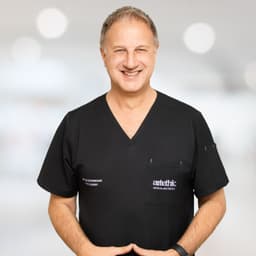
Facharzt für Plastische und Ästhetische Chirurgie & Handchirurg
Mit mehr als 30.000 Eingriffen und mehrjähriger Tätigkeit als Chefarzt führt Dr. Schuhmann seit 2016 als Gründer von artethic® seine Praxen in Düsseldorf und Berlin.