Breast Reconstruction – Options for Rebuilding

At a glance
- Breast cancer is the most common tumour disease in women – reconstruction helps with a fresh start
- Reconstruction can be performed with implants, expanders or autologous tissue
- Planning is guided by skin quality, tumour therapy and the wish for symmetry
- The nipple and areola can be formed in a second step
After breast cancer therapy, reconstruction is an important step back into life for many patients. Thanks to modern techniques, the breast shape can be restored – individually tailored to the body and the course of therapy.
Planning is teamwork
Oncologists, radiotherapists and plastic surgeons work closely together. We analyse skin quality, remaining tissue and the healthy opposite side. This creates a tailored concept that brings back symmetry and sensuality.
Reconstruction with implants
Often a tissue expander is used first, slowly stretching the skin. It is then replaced by a permanent implant. Advantage: the procedure is comparatively short and scars remain manageable. Regular check-ups and good care of the breast skin are important.
Reconstruction with autologous tissue
For autologous tissue transfers we use skin and fatty tissue from the lower abdomen (DIEP flap), back (latissimus) or buttocks. This method provides a very natural feel and adapts to weight fluctuations. However, it requires a longer operation and leaves scars at the donor site.
Finishing touches & nipple reconstruction
After the reconstruction, smaller procedures often follow: matching the healthy breast, lipofilling to compensate for small dents, or building up the nipple – for example with local flaps and medical tattooing. This creates a coherent overall picture.
Aftercare & quality of life
Compression garments, lymphatic drainage and a targeted exercise programme support healing. Regular follow-ups provide reassurance. Many patients report increased self-confidence and a new sense of their body.
Frequently Asked Questions
When does the breast reconstruction begin?
Depending on the tumour therapy, reconstruction can be performed immediately (primary) or after completion of treatment (secondary). We decide this together with oncologists.
Which methods are available?
Implants, expanders, autologous tissue (e.g. DIEP, latissimus or SIEA flaps) or combinations thereof. The choice depends on the tissue situation and the patient's wishes.
How is the nipple reconstructed?
After a successful reconstruction, the nipple can be recreated using local flap plasties or tattoo pigmentation – often in a short procedure.
Do health insurers cover the costs?
Yes. Reconstructive measures after breast cancer are part of medical care and are covered by statutory and private health insurers.
Über den Autor
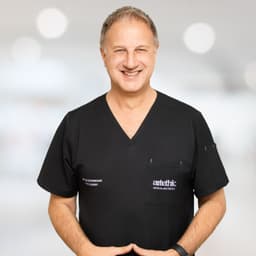
Facharzt für Plastische und Ästhetische Chirurgie & Handchirurg
Mit mehr als 30.000 Eingriffen und mehrjähriger Tätigkeit als Chefarzt führt Dr. Schuhmann seit 2016 als Gründer von artethic® seine Praxen in Düsseldorf und Berlin.